Spice Nest
Mix Herbs
Mix Herbs
Mixed Herbs Manufacturer & Exporter in India – Spice Nest
What Is Mixed Herbs?
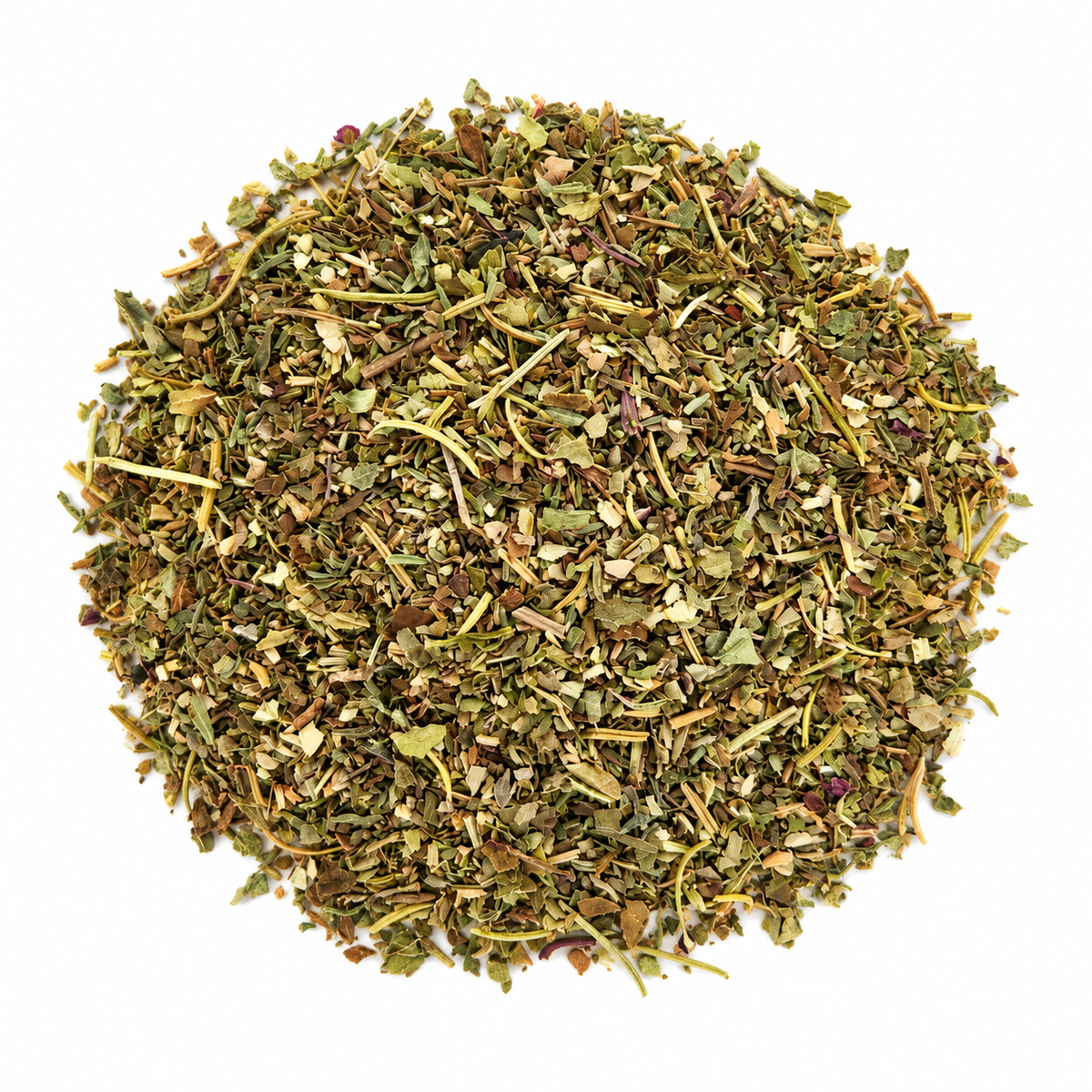
Mixed herbs are a flavorful combination of dried culinary herbs used to enhance the aroma, taste, and overall flavor of various food preparations. Commonly associated with Italian and Mediterranean cuisines, mixed herbs typically include oregano, basil, thyme, rosemary, parsley, and marjoram in different proportions.
Also known as mixed herbs seasoning, dried mixed herbs, or Italian mixed herbs, this versatile blend is commonly used in pizzas, pasta, garlic bread, sauces, soups, salads, marinades, roasted vegetables, and savory bakery products.
Mixed herbs are particularly useful for commercial kitchens and food manufacturers because they provide a convenient way to incorporate multiple herbal flavors into a single recipe.
Spice Nest is an Indian food manufacturer and exporter based in Gujarat, offering herbs, spices, seasonings, sauces, and related food products. Businesses interested in mixed herbs can contact Spice Nest to discuss product availability, bulk sourcing, private labeling, packaging preferences, and international export requirements.
For commercial buyers, selecting the right mixed herbs blend involves evaluating the botanical ingredients, blend proportions, aroma, leaf size, moisture specifications, intended applications, and food safety documentation.
Spice Nest Mixed Herbs Specifications
| Specification | Product Information |
|---|---|
| Product Name | Mixed Herbs |
| Brand Name | Spice Nest |
| Product Category | Dried Herbs & Seasonings |
| Product Type | Dried Culinary Herb Blend |
| Alternative Names | Dried Mixed Herbs, Mixed Herbs Seasoning |
| Common Herb Components | Oregano, Basil, Thyme, Rosemary, Parsley, Marjoram |
| Physical Form | Typically Dried, Cut or Crushed Leaves |
| Typical Appearance | Green to Olive-Green Mixed Herb Particles |
| Typical Flavor Profile | Aromatic, Herbal, Earthy, Savory |
| Company Location | Gujarat, India |
| Business Type | Food Manufacturer & Exporter |
| Target Buyers | Restaurants, Wholesalers, Food Manufacturers, Distributors |
| Bulk Supply | Available for Enquiry |
| Private Label | Available for Enquiry |
| Custom Herb Blends | Subject to Confirmation |
| Packaging | Confirm Available Formats |
| Country of Herb Cultivation | Subject to Confirmation |
| Shelf Life | Product-Specific Confirmation Required |
| Minimum Order Quantity | Available on Request |
Product note: Mixed herbs formulations vary by manufacturer. The ingredients and characteristics in this table describe the product category, not a confirmed Spice Nest recipe. Buyers should request the actual ingredient declaration and technical specifications.
What Ingredients Are Commonly Used in Mixed Herbs?
Mixed herbs are typically prepared by combining complementary dried culinary herbs to develop a balanced aroma and flavor profile.
Different formulations may use different herb ratios depending on whether the blend is intended for pizza, pasta, soups, sauces, or industrial food manufacturing.
Oregano
Oregano is one of the most widely recognized herbs used in Italian-inspired mixed herb blends.
It contributes a distinctive earthy, mildly peppery, and aromatic flavor that complements tomato sauces, pizza toppings, pasta, and savory bakery products.
Basil
Basil adds a fragrant, slightly sweet herbal note to mixed herbs.
It works particularly well with oregano, tomatoes, garlic, olive oil, and other ingredients commonly used in Italian-inspired food preparations.
Thyme
Thyme contributes earthy, warm, and mildly woody flavor characteristics.
It is frequently used in soups, stews, marinades, sauces, and roasted vegetable preparations.
Rosemary
Rosemary is an aromatic herb known for its distinctive pine-like and slightly woody flavor.
It can complement roasted vegetables, potatoes, grilled preparations, bread products, and selected savory sauces.
Parsley
Parsley provides a mild, fresh herbal character and contributes visual appeal to many dried herb blends.
It can be used in pasta, sauces, salad dressings, soups, and savory bakery preparations.
Marjoram
Marjoram has a mild, sweet, and delicately aromatic flavor.
It is often included in European-style herb blends to complement oregano, thyme, basil, and rosemary.
Additional Herbs and Spices
Some commercial mixed herb formulations may contain sage, savory, chives, or other suitable herbs.
Certain products marketed as mixed herbs seasoning or Italian seasoning may also include garlic powder, onion powder, chilli, or salt.
The actual composition should always be confirmed through the supplier's product specification.
Packaging & Customization
Bulk Mixed Herbs Packaging
Bulk mixed herbs are relevant to commercial kitchens, food manufacturers, seasoning companies, wholesalers, and distributors requiring dried herb blends in commercial quantities.
Proper packaging is important for protecting dried herbs from excess moisture, contamination, and storage conditions that may affect their aroma or appearance.
Businesses sourcing mixed herbs through Spice Nest can discuss:
-
Required bulk order quantity
-
Preferred packaging weight
-
Food-grade packaging materials
-
Moisture-resistant packaging
-
Packaging and labeling requirements
-
Export carton specifications
-
Storage and transportation conditions
-
Delivery destination
Buyers requiring 5 kg, 10 kg, 20 kg, or 25 kg packaging should confirm whether their preferred format is available for the specific blend.
Retail and Private Label Packaging
Private label mixed herbs can be relevant to spice brands, supermarket suppliers, online food businesses, importers, and retail distributors.
Potential retail packaging formats include:
-
Shaker bottles
-
Retail jars
-
Stand-up pouches
-
Resealable herb packets
-
Small sachets
-
Foodservice containers
-
Commercial bulk bags
Spice Nest offers private-label services across its broader food product range.
Businesses interested in private-label mixed herbs should discuss the proposed product specification, brand artwork, labeling requirements, pack size, packaging material, and anticipated order volume.
Custom Mixed Herbs Blends
Different customers may require different herb characteristics or proportions.
For example, a commercial pizza manufacturer may prefer an oregano-forward blend, while a pasta sauce manufacturer may require a formulation with a different balance of basil, thyme, and other herbs.
Buyers may enquire about:
-
Specific herb proportions
-
Oregano-forward flavor profiles
-
Italian-style herbal blends
-
Leaf size and particle distribution
-
Visual color requirements
-
Flavor and aroma intensity
-
Ingredient exclusions
-
Application-specific formulations
-
Preferred retail or industrial packaging
Custom formulation and processing services must be confirmed with Spice Nest before placing an order.
Applications of Mixed Herbs
1. Pizza and Pizzeria Applications
Mixed herbs are widely used in pizza preparation to complement tomato-based sauces, cheese, vegetables, and other savory toppings.
Restaurants and pizzerias may use an appropriate mixed herb blend in pizza sauce, as a pizza topping, or as a finishing seasoning.
A balanced combination of oregano, basil, thyme, and other herbs can create an aromatic flavor profile for Italian-inspired pizzas.
Commercial kitchens should select their preferred blend and establish a consistent quantity for regular use.
2. Pasta and Italian Cuisine
Mixed herbs are commonly used in pasta dishes, particularly recipes featuring tomatoes, garlic, olive oil, vegetables, and cheese.
Potential applications include:
-
Spaghetti
-
Penne pasta
-
Red sauce pasta
-
Baked pasta
-
Lasagna
-
Pasta casseroles
-
Italian-inspired vegetable dishes
The best herb blend and dosage depend on the sauce ingredients and cooking process.
3. Garlic Bread and Breadsticks
Mixed herbs can complement garlic bread, cheese toast, breadsticks, and other savory bakery products.
They may be incorporated into suitable butter mixtures, oil-based toppings, or bakery formulations.
Commercial bakeries should evaluate the herb size, flavor intensity, and performance during baking.
4. Pizza and Pasta Sauce Manufacturing
Mixed herbs are commonly incorporated into tomato-based sauces, pasta sauces, and other savory sauce formulations.
Food manufacturers may use herb blends to develop a balanced aroma without separately adding numerous individual herbs.
Relevant applications include pizza sauce, marinara-style sauce, pasta sauce, and selected tomato-based dips.
Manufacturers should assess particle size, flavor extraction, processing stability, and finished-product consistency.
5. Soups and Stews
Mixed herbs can add earthy, savory, and aromatic notes to soups, stews, and other cooked preparations.
They may be evaluated in vegetable soups, tomato soups, bean soups, and suitable savory broths.
The amount needed depends on the blend's flavor intensity and the other ingredients.
6. Salad Dressings and Vinaigrettes
Dried mixed herbs can be included in salad dressings, vinaigrettes, and suitable herb-based sauces.
They complement ingredients such as olive oil, vinegar, lemon juice, garlic, and vegetables.
Food manufacturers should assess hydration, particle visibility, and flavor distribution in the finished dressing.
7. Marinades and Grilled Foods
Mixed herbs are useful in developing herb-based marinades and seasonings for vegetables, poultry, seafood, and other suitable foods.
Their aromatic characteristics can complement garlic, oil, lemon, and other savory ingredients.
Commercial kitchens should evaluate the blend in their intended preparation method.
8. Roasted Vegetables and Potatoes
Mixed herbs may be used to season roasted potatoes, vegetables, mushrooms, and other savory preparations.
Their flavor can complement olive oil, garlic, and suitable sauces.
Foodservice operators should establish the preferred amount through recipe trials to achieve consistent results.
9. Snack Manufacturing
Dried mixed herbs may be used as ingredients in seasoning blends developed for savory snack products.
Potential applications include:
-
Potato chips
-
Savory crackers
-
Breadsticks
-
Roasted nuts
-
Seasoned popcorn
-
Baked snacks
-
Extruded snack products
-
Herb-flavored snack mixes
Food manufacturers should evaluate particle size, adhesion, flavor strength, and suitability for the intended production process.
10. Commercial Bakery Products
Mixed herbs can contribute herbal flavor to focaccia, savory biscuits, crackers, rolls, and other suitable bakery products.
They may be incorporated into dough, fillings, or surface toppings, depending on the recipe.
Commercial bakeries should assess their performance under the intended baking conditions.
11. Sandwiches, Burgers, and Wraps
Restaurants and cloud kitchens may incorporate mixed herbs into suitable spreads, sauces, or fillings used in sandwiches, burgers, and wraps.
Herbal flavors can complement vegetables, cheese, garlic, and tomato-based ingredients.
The blend should be selected according to the finished product's intended flavor profile.
12. Hotels, Restaurants, and Catering Services
Hotels, restaurants, cafes, and catering businesses often prepare multiple dishes that can benefit from aromatic herbs.
Mixed herbs can be evaluated across suitable Italian-inspired and international savory preparations.
Standardized recipes and measured seasoning quantities can help foodservice teams reproduce a consistent flavor.
Why Choose Spice Nest for Mixed Herbs?
1. Indian Manufacturing and Export Experience
Spice Nest is an Indian food manufacturer and exporter operating across herbs, spices, seasonings, sauces, and related food categories.
Businesses sourcing mixed herbs can contact the company to discuss product requirements, available specifications, quantities, and delivery destinations.
2. Bulk Supply Enquiries
Commercial kitchens, wholesalers, and food manufacturers often require herbs and seasonings in larger quantities.
Spice Nest welcomes bulk product enquiries, allowing buyers to discuss their purchasing needs and preferred packaging requirements.
3. Private Label Opportunities
Spice Nest offers private labeling for food brands and commercial customers.
Businesses planning to introduce a branded mixed herbs product can enquire about labeling, packaging, product specifications, and available private-label services.
4. Application-Based Product Selection
Mixed herbs blends can vary considerably in their composition and flavor.
A blend suitable for pizza may have different proportions from one developed for sauces, dressings, or snack manufacturing.
Communicating the intended application helps buyers discuss suitable product specifications.
5. International Export Enquiries
Spice Nest works with international food buyers through its export business.
Importers and distributors can discuss available mixed herbs products, destination requirements, packaging, documentation, and commercial terms.
6. Packaging and Customization Discussions
Businesses may have particular requirements for packaging size, blend proportions, ingredient composition, or labeling.
Spice Nest can review such enquiries and confirm available product-specific services.
Quality, Safety & Product Information
Herb Identification and Composition
Mixed herbs blends contain different botanical ingredients depending on the recipe.
Commercial buyers should obtain the complete ingredient declaration, including the individual herbs and their relevant specifications.
A product labeled mixed herbs should not automatically be assumed to contain the same ingredients as another supplier's blend.
Aroma and Appearance
Aroma, color, particle size, and appearance are important characteristics for commercial dried herbs.
Buyers may evaluate the balance between individual herbal notes, the size of dried leaves, and the overall consistency of the blend.
The approved characteristics should be documented in the product specification.
Moisture and Storage Conditions
Dried herbs require suitable moisture control and storage conditions.
Excess moisture or inappropriate storage can affect product quality.
Commercial buyers should obtain relevant storage instructions, packaging specifications, moisture limits, and shelf-life information.
Ingredient and Allergen Information
A mixed herbs product may contain only dried culinary herbs, but some commercial seasoning formulations include additional ingredients.
Buyers should request complete ingredient and allergen information before preparing retail labels or approving a product for use in food manufacturing.
Do not assume that all mixed herb blends are gluten-free, organic, preservative-free, salt-free, or free from specific allergens.
Manufacturing Quality
Food manufacturers and importers may require documentation according to their purchasing and market requirements.
Depending on the product and destination, relevant documents may include:
-
Product specification sheet
-
Complete ingredient declaration
-
Botanical identity information
-
Moisture specifications
-
Relevant microbiological testing
-
Pesticide residue information
-
Foreign matter limits
-
Allergen information
-
Batch traceability
-
Applicable certifications
-
Certificate of Analysis, where available
All quality claims and certifications should be verified for the exact blend and manufacturing facility.
Storage and Shelf Life
Dried mixed herbs should be stored according to the supplier's instructions.
In general, keeping dried herbs in appropriate sealed packaging and protecting them from moisture, excessive heat, and prolonged light exposure helps maintain product quality.
The actual shelf life depends on the formulation, processing, packaging, and storage conditions.
Commercial buyers should confirm product-specific shelf life before purchasing.
Mixed Herbs for Businesses and Export Supply
Mixed Herbs Manufacturer in India
Businesses looking for a mixed herbs manufacturer in India can contact Spice Nest to discuss herb blending, sourcing requirements, available product specifications, and commercial purchasing options.
Provide the desired herb composition, intended application, packaging preferences, and purchasing quantity.
The available blending and manufacturing capabilities for the specific product should be confirmed during supplier evaluation.
Bulk Mixed Herbs Supplier for Food Manufacturers
Food manufacturers may use mixed herbs in sauces, seasonings, prepared meals, savory bakery products, and snack formulations.
Buyers should communicate the required herb composition, particle size, flavor profile, and intended processing conditions.
Product approval should be based on documented technical specifications and application testing.
Wholesale Mixed Herbs for Restaurants
Restaurants, catering businesses, pizzerias, and cloud kitchens may require mixed herbs for ongoing food preparation.
When sourcing wholesale mixed herbs, evaluate the product's flavor consistency, packaging, ordering terms, price, and supply suitability.
Mixed Herbs Exporter for International Buyers
International importers can explore mixed herbs sourcing through Indian food suppliers and exporters such as Spice Nest.
Before placing an order, confirm the exact product availability, herb origins, destination-country regulations, documentation, packaging, and shipping arrangements.
Private Label Mixed Herbs for Food Brands
Private label mixed herbs can help food brands introduce their own culinary herb products.
Commercial buyers should discuss the proposed herb composition, retail packaging, ingredient declaration, labeling requirements, artwork, minimum order quantities, and target market.
Private-label services for this specific product must be confirmed before commercial production.
Frequently Asked Questions About Mixed Herbs
1. What are mixed herbs?
Mixed herbs are a combination of dried culinary herbs used to add aroma and flavor to food. Common ingredients include oregano, basil, thyme, rosemary, parsley, and marjoram. They are frequently used in pizza, pasta, soups, sauces, and savory bakery products.
2. What ingredients are used in mixed herbs?
Mixed herbs commonly contain oregano, basil, thyme, rosemary, parsley, and marjoram. The actual blend varies by manufacturer. Some products contain only herbs, while certain seasoning formulations may include additional ingredients.
3. What are mixed herbs used for?
Mixed herbs are used to flavor pizza, pasta, garlic bread, soups, sauces, marinades, roasted vegetables, and savory snacks. They are also used in commercial seasoning blends and food manufacturing.
4. Are mixed herbs the same as oregano?
No. Oregano is a single culinary herb, while mixed herbs contain two or more herbs combined in a particular proportion. Oregano is often an ingredient in mixed herbs, but it is not the complete blend.
5. Are mixed herbs the same as Italian seasoning?
Not necessarily. Italian seasoning commonly contains a combination of herbs such as oregano, basil, rosemary, and thyme. Mixed herbs is a broader product description that may refer to Italian-style blends or other herbal combinations. The ingredient declaration establishes the actual difference.
6. What is the difference between mixed herbs and pizza seasoning?
Mixed herbs generally refer to a combination of dried culinary herbs. Pizza seasoning may contain similar herbs alongside garlic, chilli, salt, or other spices. The precise difference depends on the formulation.
7. Can mixed herbs be used on pizza?
Yes. Mixed herbs are commonly used to complement pizza sauces, cheese, vegetables, and other toppings. They may be incorporated into a sauce or used as a suitable topping, depending on the recipe.
8. Can mixed herbs be used for pasta?
Yes. Mixed herbs are widely used in pasta recipes, particularly dishes featuring tomato sauce, garlic, olive oil, vegetables, and cheese. The amount required depends on the blend and recipe.
9. Can mixed herbs be used for garlic bread?
Yes. Mixed herbs can complement garlic bread, cheese toast, and breadsticks. They may be combined with suitable butter or oil mixtures or incorporated into bakery recipes.
10. Can mixed herbs be used in soups?
Yes. Mixed herbs may be used in vegetable soups, tomato soups, and other savory preparations. They contribute aromatic herbal notes that complement the other ingredients.
11. Can mixed herbs be used in marinades?
Mixed herbs can be incorporated into suitable marinades for vegetables, poultry, seafood, and other foods. They are often combined with ingredients such as garlic, oil, lemon juice, or vinegar, depending on the recipe.
12. Can mixed herbs be used in snack manufacturing?
Yes. Mixed herbs can be evaluated as ingredients in seasoning blends for chips, crackers, popcorn, breadsticks, and other savory snacks. Manufacturers should assess particle size, flavor, and processing suitability.
13. Are mixed herbs spicy?
Mixed herbs generally provide herbal rather than chilli-based heat. However, certain commercial herb seasoning blends may contain pepper, chilli, or other spices. The flavor profile depends on the actual formulation.
14. Do mixed herbs contain salt?
Not always. Many dried mixed herbs blends consist only of herbs, while some mixed herb seasonings contain added salt. Buyers should check the ingredient declaration and nutrition information.
15. Are mixed herbs vegetarian or vegan?
Herb-only blends are generally plant-based, but dietary suitability should be confirmed for the exact product. Some commercial seasoning blends include additional ingredients that may affect vegan or vegetarian suitability.
16. Can I buy mixed herbs in bulk from Spice Nest?
Businesses can contact Spice Nest to enquire about mixed herbs availability, bulk purchasing quantities, product specifications, packaging, and commercial terms. Product-specific supply arrangements should be confirmed before placing an order.
17. Does Spice Nest offer private label mixed herbs?
Spice Nest offers private-label services for food products. Buyers interested in branded mixed herbs can enquire about product availability, packaging formats, labeling requirements, and minimum order quantities.
18. What packaging options are available for mixed herbs?
Mixed herbs are commonly sold in retail jars, shaker bottles, pouches, foodservice packs, and larger commercial bags. Available packaging formats and quantities should be confirmed with Spice Nest for the specific product.
19. What is the shelf life of dried mixed herbs?
The shelf life depends on the herbs used, drying process, packaging, and storage conditions. Buyers should refer to the product-specific shelf-life declaration rather than assuming a universal duration.
20. Why consider Spice Nest for mixed herbs sourcing?
Spice Nest is an Indian food manufacturer and exporter operating in herbs, spices, seasonings, and related food categories. Commercial buyers can enquire about mixed herbs availability, bulk supply, product specifications, private labeling, and international export requirements.
Enquire About Spice Nest Mixed Herbs
Looking for a Mixed Herbs Manufacturer and Exporter in India?
Connect with Spice Nest to discuss dried mixed herbs for restaurants, pizzerias, food manufacturers, seasoning companies, wholesale distributors, private-label brands, and international food businesses.
Whether your requirements involve mixed herbs for pizza, pasta, garlic bread, sauces, snack manufacturing, or commercial food preparation, share your preferred product specification and purchasing requirements.
For a commercial enquiry, provide:
-
Required mixed herbs type
-
Preferred herb composition
-
Intended food application
-
Expected purchasing quantity
-
Packaging requirements
-
Destination country
-
Any special technical or labeling requirements
Contact Spice Nest for Mixed Herbs Product Enquiries, Bulk Supply Discussions, Private Label Requirements, and Export Quotations.