Top Garlic Paste Exporter (2026): Quality from India
On this page 0 sections
Garlic Paste Exporter
If you’re sourcing garlic paste for food manufacturing, retail, or foodservice, picking the right garlic paste exporter is the difference between a smooth, compliant import-and a shipment that gets delayed, rejected, or arrives with compromised flavor. Garlic paste looks simple, but exporting it at scale involves strict food-safety controls, the right packaging technology, correct classification (including garlic paste HS code), and reliable cold chain or shelf-stable logistics depending on product type.
This guide is written to be practical: you’ll learn how to evaluate suppliers, compare paste types, understand documentation, and plan shipping so you can confidently buy from a garlic paste exporter from India (or any exporting country) and deliver consistent quality to your market. Along the way, you’ll also see where an export-focused partner like Spice Nest can support you-whether you need bulk packs for manufacturing, foodservice-friendly formats, or private label-ready SKUs.

Why garlic paste is a global staple ingredient
Garlic paste has become a preferred input for:
Ready meals & sauces: consistent flavor, reduced prep time
Meat & poultry processing: uniform distribution and speed
HORECA (hotels/restaurants/catering): operational efficiency
Retail jars & pouches: convenience for consumers
For importers, the appeal is predictable costs, scalable supply, and simplified production. For exporters, the product’s success depends on controlling microbial load, oxidation, enzymatic activity, and packaging integrity from factory to destination.
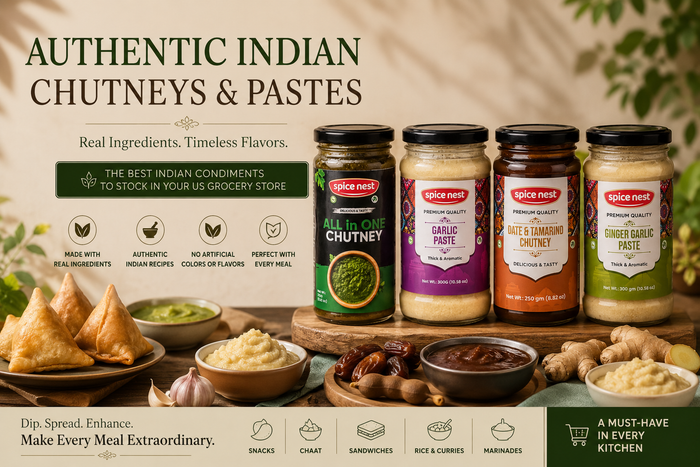
If you’re consolidating SKUs, it’s common to bundle garlic paste with complementary items like ginger garlic paste under one export program. Many buyers working with Spice Nest take this approach to improve container utilization and simplify supplier management.
Garlic paste vs garlic puree: what buyers should know
Many buyers use these terms interchangeably, but there are real differences that matter in formulation and labeling.
Key differences (practical view)
Texture:
Garlic paste is typically thicker, smoother, and more spreadable.
Garlic puree can be looser or more “wet,” sometimes with finer particulates.
Ingredients:
Paste may include permitted stabilizers/acidulants depending on market and spec.
Puree may be closer to “100% garlic” depending on producer.
Applications:
Paste is favored for marinades, spice blends, and controlled dosing.
Puree can be preferred for soups, dips, and sauces where fluidity helps.
When negotiating specs, always request: Brix/solids, pH, particle size, and preservatives/acidulants (if any). This avoids costly reformulation after import.
Buyer tip: if you’re planning private label garlic paste, confirm naming and ingredient statements early (for example, “paste” vs “puree”), then align packaging artwork and nutrition panels with your destination requirements. Teams at Spice Nest can work from your spec sheet and help you finalize pack formats and carton configurations suitable for export.

What makes a reliable garlic paste exporter (beyond price)
The best suppliers aren’t just factories—they are process-driven partners who can consistently meet your country’s regulatory requirements and your brand’s quality standards.
What to prioritize
Food safety certification & audit readiness
Look for recognized food safety systems (such as ISO 22000 / FSSC 22000 / BRC or equivalent), especially if you supply modern retail or large food brands.
Traceability and raw garlic sourcing
Ask about farm sourcing, pesticide residue controls, and lot traceability.
Microbiological control
Garlic is biologically active; paste can be high risk if not processed correctly. You want validated controls and a strong lab system.
Packaging capability
The exporter should offer packaging that fits your channel: retail jars, foodservice tubs, bulk bags, drums, or pails.
Export experience
Documentation accuracy and compliance know-how reduce delays at destination.
Conversion-focused shortcut: when you’re comparing quotes, ask each supplier to share (1) a sample COA, (2) a sample packing list, and (3) a typical export lead time. If the answers are slow or inconsistent, that friction usually shows up again at shipment time.
If you want a single point of contact for exports, Spice Nest can support buyers with clear specification alignment, export documentation coordination, and multi-format supply (bulk and retail) depending on your channel.
Garlic paste wholesale: product formats and who they fit
When buying garlic paste wholesale, you should align format with your usage, warehouse conditions, and shelf-life expectations.
Common export formats
Retail: glass jars, PET jars, stand-up pouches
Foodservice: 1–5 kg tubs/pouches
Industrial bulk: 20–25 kg pails, 200 kg drums
Aseptic bulk: bag-in-drum or bag-in-box for ambient shipping (where applicable)
A good bulk garlic paste supplier will help you choose the right format based on your distribution model (ambient vs chilled), your turnover speed, and the target shelf life.
Where Spice Nest fits: if you’re building a product line (not just a single SKU), ask for a combined offer covering garlic paste and ginger garlic paste in matched pack sizes (for example, foodservice tubs plus bulk packs for manufacturing). That “range” approach often improves landed cost per container and makes reordering easier.

Garlic paste shelf life packaging: how shelf life is achieved
Shelf life depends on the recipe, processing, and packaging-not marketing claims.
Factors that drive shelf life
Thermal processing / pasteurization
pH control (where allowed by local regulations/spec)
Water activity and solids
Oxygen management (oxidation affects flavor/color)
Packaging barrier properties (oxygen and light)
Storage temperature (ambient vs refrigerated)
Aseptic garlic paste packaging benefits
For large buyers, aseptic (or similarly shelf-stable export-oriented packaging) can be a strong mix of safety and logistics efficiency. Typical aseptic garlic paste packaging benefits include:
Longer ambient shelf life without heavy reliance on cold chain
Lower shipping cost compared with refrigerated containers (in many lanes)
Reduced spoilage risk during port delays
Better consistency for industrial users (food manufacturing)
Aseptic isn’t always necessary-especially for local or fast-moving chilled distribution-but it can be a major advantage for cross-border bulk supply.
Commercial tip: if you’re targeting the U.S. market, decide early whether you want a chilled program or an ambient program. Then request quotes accordingly. Spice Nest can quote based on your preferred storage condition and pack format so you’re comparing like-for-like across exporters.

Ginger garlic paste exporter: why buyers bundle these products
Many importers source garlic paste alongside ginger garlic paste because:
Both are used together in multiple cuisines
The same production line can handle both with proper controls
It improves container utilization and SKU efficiency
If you’re evaluating a ginger garlic paste exporter, ask whether they can supply both items with consistent specs and separate contamination controls. A strong ginger garlic paste exporter in India often offers multi-SKU export programs tailored for wholesalers and private label brands.
Strategic mention: if your buyers want a simple “kitchen essentials” lineup, you can position Spice Nest as a one-stop source for garlic paste and ginger garlic paste across retail, foodservice, and industrial packs—so your procurement team manages fewer suppliers while expanding shelf presence.

Garlic paste export process guide (step-by-step)
A clear garlic paste export process guide helps you avoid the most common pitfalls: wrong packaging, missing documents, incorrect labeling, and temperature abuse.
1) Define your product spec (don’t skip this)
Lock these details before you request final pricing:
Ingredient statement (garlic %, salt %, acidulants/preservatives if used)
Texture/particle size
pH and microbial limits
Packaging type + net weight + carton configuration
Storage condition (ambient vs refrigerated)
Target shelf life and destination labeling language
2) Confirm regulatory fit for your destination
Different countries vary on:
permitted additives
labeling format and nutrition panels
residue limits and microbiological standards
import registrations and facility approvals
Your exporter should be able to share destination experience-or be willing to align to your compliance consultant’s requirements. If you’re sourcing for the U.S., align on U.S.-ready label requirements and importer documentation flow before production starts.
3) Request samples from production-equivalent batches
Ask for:
Pre-shipment sample retention policy
COA format
Micro test reports
Shelf-life evidence (real-time or accelerated, where acceptable)
Practical conversion step: if you’re considering Spice Nest, request samples of both garlic paste and ginger garlic paste in the exact format you want to sell (retail jar/pouch) or run in production (bulk pack). That reduces risk when you scale to full container loads.
4) Approve packaging artwork and palletization
Make sure you confirm:
carton strength and inner packing
pallet dimensions and container loading plan
barcodes and batch coding
“country of origin” marking requirements
5) Finalize contract terms and inspection plan
Important contract points:
Incoterms (FOB/CIF/CFR/DDP as applicable)
Payment terms (LC/TT) and timing
Quality dispute protocol (third-party inspection, retention samples)
Lead time and penalties for delays (where feasible)
6) Manufacture, test, and ship
A mature exporter will provide:
batch records
in-house and/or third-party testing
shipping updates and document courier plan
This is the foundation of how to export garlic paste successfully as either a first-time importer or a scaling buyer.
Garlic paste HS code: classification and why it matters
Correct classification drives duty rates, import permits, and clearance speed. Garlic paste HS code selection may vary by:
whether it’s preserved with vinegar/acid
whether it’s a prepared sauce/condiment vs processed vegetable
exact composition and local customs interpretations
Because HS classification can differ by country, treat HS code as a compliance item, not a guess. Ask your exporter what they commonly use-and confirm with your customs broker for your destination before shipping.
Action tip: Put the HS code confirmation step into your purchasing checklist so it doesn’t get decided at the last minute.
Garlic paste export documentation checklist (practical)
A missing or inconsistent document can cause demurrage charges, delayed delivery, or even rejection. Use this garlic paste export documentation checklist as your baseline (your destination may require more):
Commercial Invoice
Packing List
Bill of Lading / Airway Bill
Certificate of Origin (if required)
Certificate of Analysis (COA) for each batch/lot
Microbiological test report (as agreed)
Manufacturer’s food safety certificate (as applicable)
Health certificate / sanitary certificate (if required by destination)
Phytosanitary certificate (sometimes requested depending on product form and rules)
Insurance certificate (if CIF or insured shipment)
Label artwork approval record / final label proofs
Keep a document “control copy” folder per shipment. It reduces errors when you reorder.
Buyer shortcut: ask exporters (including Spice Nest) to share blank document templates up front. If templates align with your broker’s expectations, you’ll reduce clearance friction before your first shipment ships.
International garlic paste shipping requirements: avoid quality loss in transit
International garlic paste shipping requirements depend on whether your paste is chilled/frozen, hot-filled, pasteurized, or shelf-stable.
Key shipping risk areas
Temperature excursions
Refrigerated paste should ship in reefer with data logging.
Ambient shipments still need protection from extreme heat where possible.
Container loading
Ensure pallets allow airflow (for reefers) and avoid crushed cartons.
Transit time
Longer routes increase risk; choose packaging and process accordingly.
Port delays
Shelf-stable formats can reduce risk during delays; chilled products need contingency planning.
Practical shipping tips
Use temperature loggers for reefer shipments.
Confirm pallet wrapping and corner protection to prevent shifting.
Align production date with vessel schedule so shelf life isn’t wasted in pre-carriage storage.
Validate carton stacking strength to avoid burst packs in humid conditions.
Private label garlic paste options: what to request
If you sell under your own brand, private label garlic paste options can range from simple label printing to full brand development.
What to clarify early
Minimum order quantities per SKU and per design
Jar/pouch shape options and cap/closure types
Label material (paper vs BOPP) and adhesive performance in humidity
Outer carton branding and shelf-ready packaging options
Regulatory labeling support (nutrition facts, allergens, claims)
If private label is part of your growth plan, it’s worth asking Spice Nest for a “range proposal” (for example: garlic paste + ginger garlic paste) with suggested pack sizes, carton counts, and a reorder cadence. That makes your first launch feel like a system-rather than a one-off purchase.
Garlic paste MOQ and pricing factors: what really drives cost
Buyers often focus only on “price per kg,” but export pricing is influenced by multiple operational variables. Understanding garlic paste MOQ and pricing factors helps you negotiate intelligently.
Main cost drivers
Raw garlic price volatility (seasonality and regional crop conditions)
Garlic variety and pungency grade
Processing method (enzyme control, pasteurization, shelf-stability approach)
Additives and recipe (salt, acidity regulators, stabilizers-if any)
Packaging type
Retail jars and small pouches cost more per kg than bulk drums.
Testing frequency and third-party inspection
Incoterms and freight
CIF vs FOB changes your landed cost model.
Typical MOQ structures (how exporters think)
MOQ by pack size (e.g., 500 g jar vs 1 kg pouch)
MOQ by container utilization (LCL vs FCL)
MOQ by SKU count for private label runs
Ask the exporter to quote in two ways:
-
EXW/FOB product-only price
-
Estimated landed price to your port (with assumptions listed)
Garlic paste supplier verification steps (buyer due diligence)
When you’re choosing a new supplier-especially overseas-verification is non-negotiable. Use these garlic paste supplier verification steps before sending a deposit or issuing an LC:
Business legitimacy
Verify legal registration, address, and export license details.
Factory audit evidence
Request current certificates, scope, and audit dates (if relevant to your channel).
Product testing capability
Ask what tests are done in-house vs outsourced and how often.
Traceability test
Ask them to demonstrate lot tracking from raw garlic to finished goods.
Reference shipments
Request anonymized past export documentation samples (invoice/packing list/BL format).
Pre-shipment inspection plan
Agree on AQL, sampling method, and dispute resolution.
Label and compliance review
Confirm your destination labeling and additive rules before production.
If a supplier hesitates or provides inconsistent paperwork, treat that as a risk signal.
How to find garlic paste manufacturers (and shortlist fast)
Finding suppliers is easy; finding qualified suppliers takes a method. Here’s how to find garlic paste manufacturers without wasting weeks.
High-signal sourcing channels
Trade shows focused on food ingredients and processed foods
Government export promotion bodies and verified exporter directories
Industry referrals (co-packers, sauce manufacturers, spice importers)
Third-party audit platforms and certification body databases (when available)
Shortlisting criteria (fast filter)
Can they share a recent COA + micro report format within 24–48 hours?
Do they have export-ready packaging options (bulk + retail)?
Can they support private label and destination labeling rules?
Do they provide clear lead times, MOQs, and shelf-life data?
For many buyers, a garlic paste exporter from India becomes attractive because India has a large base of spice and paste processors, strong ingredient supply chains, and export familiarity-especially when working with disciplined QA systems and export-ready documentation.
Best countries to import garlic paste: how to decide
There isn’t one universal answer-“best” depends on your product spec, price point, and compliance needs. Still, buyers often evaluate best countries to import garlic paste using these criteria:
Consistency of raw material supply
Food processing maturity and certifications
Shipping time to your destination
Trade agreements and duty structure
Supplier responsiveness and documentation accuracy
Action tip: Instead of choosing a country first, choose a spec and risk profile first-then select the country/supplier combination that meets it.
Quality specs importers should request (copy/paste template)
Use this as a starting point when requesting offers from any garlic paste exporter or bulk garlic paste supplier:
Basic specs
Product name: Garlic paste / Garlic puree (specify)
Ingredients and percentages:
Additives (if any):
pH range:
Brix/solids:
Particle size / texture:
Color standard:
Flavor/pungency notes:
Food safety and testing
Micro limits (TPC, yeast & mold, coliform/E. coli, Salmonella, etc.):
Heavy metals (if required):
Pesticide residue compliance (destination standard):
COA per batch: Yes/No
Retention sample policy:
Packaging
Packaging format: jars/pouches/pails/drums/aseptic (specify)
Net weight:
Inner pack / carton:
Pallet configuration:
Shelf life and storage conditions:
Required language and label rules:
Commercial
MOQ:
Lead time:
Incoterms:
Payment terms:
Private label requirement: Yes/No
If you want faster supplier comparison, send the same template to every exporter (including Spice Nest) and ask them to respond line-by-line. It creates an apples-to-apples shortlist.
FAQ: garlic paste exporters (quick buyer answers)
What is the best way to buy garlic paste wholesale for the U.S. market?
Start with the end channel (retail vs foodservice vs manufacturing), then lock your spec and storage conditions. Request samples, verify documentation templates, and model landed cost with your broker. Exporters like Spice Nest can streamline this by quoting multiple pack formats under one program.
Can I source both garlic paste and ginger garlic paste from one exporter?
Yes-many importers do, to reduce supplier complexity and improve container utilization. If you want a bundled offer, ask for matched specifications and separate COAs per SKU. Spice Nest can support multi-SKU export programs when you want both products.
How do I verify a garlic paste exporter from India?
Use a verification checklist: business registration, export documentation samples, product testing evidence, traceability demonstration, and production-equivalent samples. If anything is unclear, clarify before you place a deposit or open an LC.
What documents are usually required for garlic paste export?
Typically: invoice, packing list, bill of lading, COA, and supporting certificates as required by destination. Confirm the exact set with your broker and align templates with your exporter before production starts.
Takeaway: choose a garlic paste exporter like a long-term supply partner
The right garlic paste exporter delivers more than product-they deliver predictable quality, correct paperwork, stable packaging performance, and shipping discipline. Whether you’re sourcing from a garlic paste exporter from India or another origin, your success will come from:
clear specs and testing expectations
verified supplier capability and documentation discipline
packaging matched to shelf life and logistics
repeatable reorder process (templates, lead times, and QC checkpoints)