Spice Nest
Psyllium Seeds
Psyllium Seeds
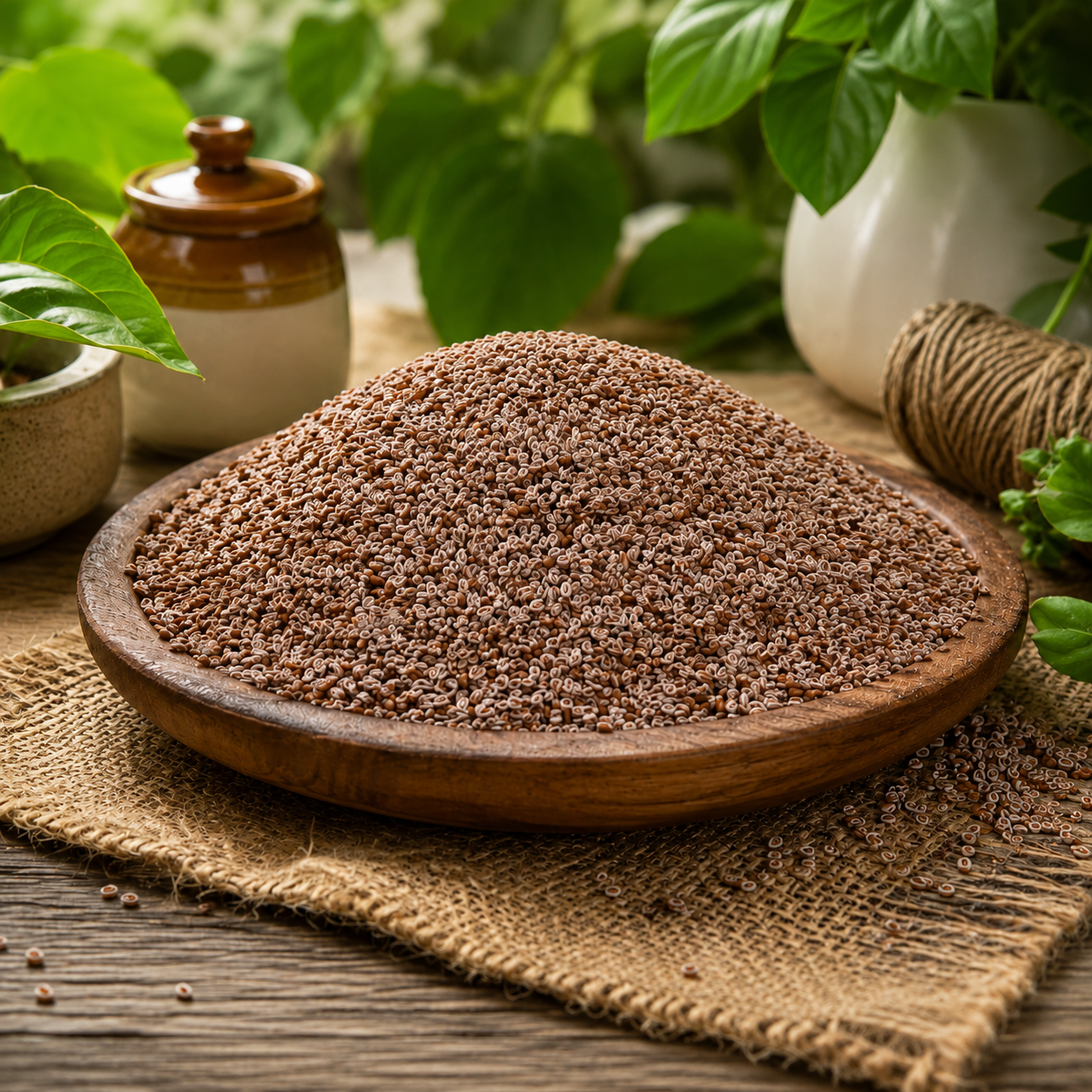
Spice Nest Premium Psyllium Seeds are carefully selected whole seeds of Plantago ovata, commonly associated with psyllium and isabgol. The seeds are cleaned, graded, hygienically processed, and packed to help maintain their natural quality, colour, texture, and freshness. Plantago ovata is an accepted botanical species whose natural range includes India.
With reliable quality and export-ready packaging options, Spice Nest Psyllium Seeds are suitable for supermarkets, health-food retailers, food manufacturers, ingredient processors, nutraceutical businesses, wholesalers, importers, and food distributors across international markets.
Specification
| Specification | Details |
|---|---|
| Product Name | Premium Psyllium Seeds |
| Brand Name | Spice Nest |
| Product Type | Whole Psyllium / Isabgol Seeds |
| Botanical Name | Plantago ovata |
| Seed Type | Whole Psyllium Seeds |
| Ingredients | Psyllium Seeds |
| Processing Method | Cleaned, Graded & Hygienically Processed |
| Packaging Type | Retail Packaging / Bulk Export Packaging Available |
| Net Weight | As per packaging option |
| Shelf Life | As per packaging details |
| Storage Condition | Store in a cool, dry place away from direct sunlight and moisture |
| Taste Profile | Mild, Neutral & Naturally Earthy |
| Usage | Food Processing, Grinding, Soaking, Baking & Ingredient Preparation |
| Suitable For | Retailers, Food Manufacturers, Wholesalers, Importers & Distributors |
| Country of Origin | India |
| Export Market | USA, UK, UAE, Saudi Arabia, Qatar & Worldwide |
Packaging & Customization
Bulk packaging and private label solutions are available for international buyers, wholesalers, importers, retailers, food manufacturers, and distributors based on their specific business requirements.
Packaging size, branding, labelling, and export packing requirements can be discussed according to order quantity and destination market.
Health Benefits
Psyllium seeds are valued for the natural mucilage associated with their outer seed coat. When Plantago seeds come into contact with water, the seed surface develops a polysaccharide-rich mucilage. Commercial psyllium husk is produced from the outer layer of Plantago ovata seeds, while whole psyllium seeds retain both the outer seed components and inner seed tissues.
Because many published clinical studies and regulated health claims specifically concern psyllium husk or psyllium fiber rather than whole psyllium seeds, Spice Nest avoids treating the two forms as nutritionally identical. In the United States, for example, the specific soluble-fiber health-claim regulation identifies psyllium seed husk rather than whole seed.
Key Benefits of Psyllium Seeds
Naturally Contains Fiber-Rich Mucilage
Psyllium seeds develop a natural mucilage layer when hydrated. This water-responsive characteristic is one of the key functional properties associated with Plantago ovata seeds.
Supports a Fiber-Conscious Diet
Whole psyllium seeds contain the seed coat from which psyllium fiber is obtained, along with the natural inner portions of the seed. They can therefore be used as a plant-based ingredient in fiber-focused food preparations.
Whole-Seed Natural Ingredient
Unlike isolated psyllium husk or psyllium husk powder, whole psyllium seeds retain the complete seed structure, making them suitable for buyers and manufacturers who require whole-seed psyllium as a raw ingredient.
Suitable for Food & Ingredient Processing
Psyllium-based ingredients are valued in food applications because of their hydration, binding, thickening, and textural properties. Psyllium husk in particular is widely studied for use in bakery and other food formulations.
Mild & Versatile Taste Profile
The naturally mild and neutral character of psyllium seeds makes them suitable for incorporation into different food and ingredient formulations without introducing an overpowering flavour.
Convenient for Retail & Bulk Requirements
Spice Nest Premium Psyllium Seeds are suitable for retail packs as well as larger bulk requirements, providing a practical sourcing option for retailers, wholesalers, ingredient processors, food businesses, and international distributors.
Frequently Asked Questions
1. What are psyllium seeds?
Psyllium seeds are the seeds of plants such as Plantago ovata, a species commonly associated with Indian psyllium or isabgol. The seeds are small and develop a mucilage-rich outer layer when they come into contact with water.
Spice Nest Premium Psyllium Seeds are supplied as carefully selected whole seeds for retail, wholesale, food-processing, and export requirements.
2. Are psyllium seeds the same as psyllium husk?
No. Whole psyllium seeds and psyllium husk are related but different products.
Psyllium husk is obtained from the outer seed layer of Plantago ovata, while whole psyllium seeds contain the outer coating as well as the inner seed tissues.
3. What is the difference between whole psyllium seeds and psyllium husk powder?
Whole psyllium seeds retain the complete seed structure. Psyllium husk is separated from the seed coat, while psyllium husk powder is produced by further milling that husk.
Because the forms differ in composition and concentration, whole psyllium seeds should not automatically be treated as equivalent to concentrated psyllium husk powder.
4. What are the benefits of psyllium seeds?
Psyllium seeds are valued primarily for their natural seed-coat mucilage and their usefulness as a plant-based ingredient. Whole seeds retain both the mucilage-bearing outer layer and the inner seed tissues.
Most established clinical research on digestive, cholesterol, and related outcomes specifically studies psyllium husk or isolated psyllium fiber, so those findings should not automatically be presented as proven benefits of every whole-seed product.
5. How to use psyllium seeds?
Whole psyllium seeds can be used according to the intended food or processing application. Depending on the formulation, they may be soaked, ground, milled, or incorporated into suitable food preparations.
Because psyllium forms mucilage and absorbs water when hydrated, consumers should always follow the directions provided on the final packaged product.
6. How to eat or consume psyllium seeds?
When psyllium seeds are intended for direct food use, they may be prepared by soaking or processing them according to the recipe and product directions.
Psyllium materials absorb water and can swell considerably, so products intended as dietary-fiber supplements should always be taken according to their labelled preparation and hydration instructions. FDA-regulated psyllium-husk products, for example, carry specific adequate-fluid warnings.
7. Can psyllium seeds be ground into powder?
Yes. Whole psyllium seeds can be mechanically ground or milled depending on the intended food or industrial application.
However, ground whole psyllium seed is not the same as psyllium husk powder, because whole-seed material also contains the inner parts of the seed.
8. Are psyllium seeds used for constipation?
Psyllium is widely associated with digestive-fiber products, but an important distinction should be made between whole psyllium seeds and psyllium husk.
Clinical research and many regulated products for bowel regularity primarily concern psyllium husk or psyllium fiber. Whole seeds should therefore not be marketed as an equivalent medical treatment without appropriate product-specific evidence and regulatory compliance.
9. Psyllium seeds vs chia seeds-what is the difference?
Psyllium and chia are different botanical ingredients with different nutritional and functional characteristics.
Psyllium from Plantago ovata is particularly known for the mucilage associated with its seed coat and the high-viscosity fiber obtained as psyllium husk. Chia seeds are a separate whole-food seed and should not be considered interchangeable with psyllium seeds or psyllium husk.
10. Can psyllium seeds be used in gluten-free baking?
Psyllium-based ingredients can be used in food and bakery formulations because of their water-binding and textural properties. However, psyllium husk or psyllium fiber is more commonly studied for gluten-free baking applications than intact whole seeds.
Whole seeds may require grinding or recipe-specific processing depending on the desired texture and functionality.
11. How should psyllium seeds be stored?
Psyllium seeds should be kept in a cool, dry place, protected from direct sunlight, excessive heat, and moisture.
Keep the package properly sealed after opening and always follow the storage instructions printed on the product packaging.
12. Where can I buy premium psyllium seeds online?
Spice Nest Premium Psyllium Seeds are available for enquiries from retailers, wholesalers, importers, distributors, food manufacturers, and other commercial buyers.
Supply requirements can be discussed for customers and businesses in India, USA, UK, UAE, Saudi Arabia, Qatar, and other international markets.
13. Do you supply bulk psyllium seeds for wholesalers and importers?
Yes. Spice Nest offers bulk psyllium seed supply for wholesalers, importers, food processors, ingredient businesses, supermarkets, distributors, and other commercial buyers.
Bulk packaging requirements can be customized according to quantity, destination market, and buyer requirements.
14. Are Spice Nest Psyllium Seeds suitable for export markets?
Yes. Spice Nest Premium Psyllium Seeds are prepared with retail, wholesale, and international trade requirements in mind.
Export packaging options are available for buyers in the USA, UK, UAE, Saudi Arabia, Qatar, and other worldwide markets.
15. Do you provide private label and customized packaging for psyllium seeds?
Yes. Spice Nest can provide private label and customized packaging solutions based on buyer requirements, order quantity, target market, and packaging specifications.
International importers, wholesalers, supermarket chains, distributors, and food businesses can contact Spice Nest to discuss bulk supply and customized psyllium seed packaging.