Authentic Indian Chutneys for UK Retail Markets
On this page 0 sections
Genuine Indian Chutneys for UK Retail
Chutney is one of the easiest ways to bring real Indian flavour into retail, deli, and foodservice ranges. For UK buyers, genuine Indian chutneys for UK retail offer more than a condiment. They give shoppers a useful product for snacks, meals, sharing platters, and home cooking. The best jars balance real taste, approachable flavour, and easy use so shoppers know why to add one to their basket.
What makes an Indian chutney feel authentic?
An Indian chutney feels authentic when it follows the flavour logic of Indian cooking. Freshness, balance, spice, acidity, sweetness, and texture should work together. No single note should take over.
Authentic Indian chutneys are not just hot sauces or sweet relishes with Indian-style labels. They are built to lift food, cool heat, sharpen fried snacks, or add depth to simple meals.
In India, chutneys vary by region, ingredient, and occasion. Coriander and mint chutney can be bright, green, and cooling. Tamarind chutney is often sweet and tangy. Coconut chutney can be mild and creamy. Garlic or chilli chutneys can bring more heat. That mix is what makes traditional Indian dips so useful in retail. Each one fits a different eating moment.
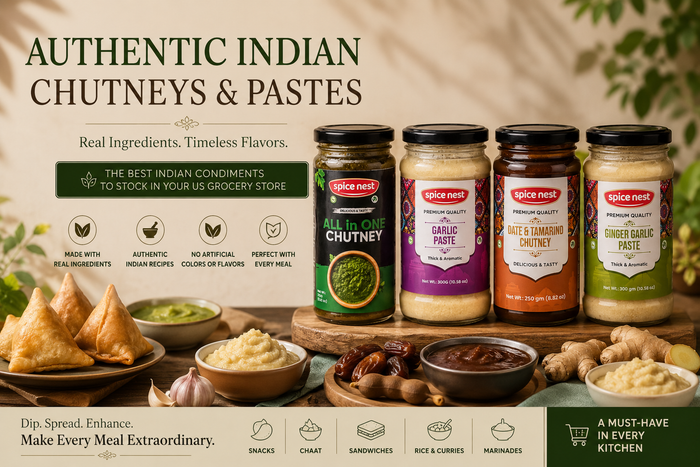
For UK shelves, clarity matters too. Shoppers should see the flavour at a glance, picture how to use it, and trust that the product has not been watered down into something bland. A focused range from a brand such as Spice Nest can help retailers present chutneys as practical, flavour-led choices rather than niche items.

Chutney belongs in more than the world foods aisle
Many shoppers first meet chutney through Indian meals or takeaways. But the category can do much more.
Chutney for snacks is an easy message. It can be dipped, spread, drizzled, or served on the side.
A jar that works with samosas can also work with crisps, wraps, sandwiches, cheese boards, grilled meats, roasted vegetables, and lunch bowls.
That flexible use matters in UK retail. Shoppers often want small upgrades that make familiar meals feel new. Mango chutney can soften a spicy curry. Green chutney can brighten a chicken wrap. Chilli-garlic chutney can add heat to roasted potatoes or a toasted cheese sandwich. Retailers can move beyond serve with curry and show everyday uses that feel realistic.
This is where product education helps. If the label, shelf talker, online description, or recipe card gives customers a quick idea, the product feels less daunting. Genuine Indian chutneys for UK retail work best when real taste is paired with easy use.
The core flavours shoppers understand quickly
A strong chutney range does not need to be overwhelming. In fact, a short list can make it easier for customers to choose with confidence. The best retail range covers a few clear flavour roles, then grows once shoppers know the category.
Useful flavour positions include:
- Sweet and tangy: Mango or tamarind-style chutneys are easy to use with snacks, grilled foods, and cheese.
- Fresh and herby: Coriander, mint, or green chutneys add lift to wraps, salads, kebabs, chaats, and fried starters.
- Hot and bold: Chilli, garlic, or spiced chutneys suit customers who want heat without cooking from scratch.
- Creamy and mellow: Coconut-based chutneys work well with South Indian meals, dosas, idlis, and lighter snack boards.
- Deep and savoury: Tomato, onion, or spice-led chutneys add richness to sandwiches, rice dishes, and simple home-cooked meals.
Each flavour answers a different need. Some shoppers want a safe first step. Others want regional character or more heat. A balanced range gives both groups a reason to buy.
How can retailers position chutney for everyday UK shoppers?
Retailers can position chutney as an easy flavour shortcut rather than a specialist product. The clearest message is that traditional Indian dips make everyday food more exciting with very little effort: open the jar, add a spoonful, and lift the plate.
This works best when linked to familiar eating moments.
Instead of relying only on cuisine labels, connect chutneys to habits customers already have.
For example, a tangy chutney can sit near poppadoms, sharing snacks, Indian ready meals, or marinades.
A fresh green chutney can be promoted with wraps, barbecue foods, or lunch inspiration.
A sweet mango chutney can fit seasonal entertaining, cheese, or party-food conversations.
Online retail copy can do the same job. Short, specific phrases are more helpful than broad claims. Serve with samosas, spoon into wraps, or pair with mature cheese gives the shopper a clear picture. Authentic flavour is useful, but it becomes stronger when supported by practical serving ideas.
Chutney education can drive confidence and repeat purchase
Many shoppers are curious about Indian flavours but may not know the difference between chutneys, pickles, pastes, and sauces. A little education removes friction. Chutneys are usually used as accompaniments, dips, spreads, or finishing touches. Cooking pastes are usually used at the start of a dish. That difference helps customers pick the right product and use it well.
Retailers can also encourage a small chutney collection at home. One sweet chutney, one fresh chutney, and one hot chutney can cover snacks, quick lunches, and meal upgrades. That can raise basket value without making cooking feel hard.
Practical education ideas include:
- Add pairing notes on product pages and shelf labels, such as great with pakoras, wraps, and grilled paneer.
- Use heat indicators so customers can choose mild, medium, or hot without uncertainty.
- Show serving moments through photography: snack boards, lunch wraps, barbecue plates, or curry-night sides.
- Offer simple bundle logic, such as a sweet, herby, and spicy chutney trio.
- Share quick serving tips instead of long recipes where shoppers may not have time to cook.
This kind of guidance makes the category feel approachable while still respecting its Indian roots.
Simple ways customers can use chutney at home
Chutney does not need a complex recipe to be useful. Many Indian chutney recipes follow the same rule: use a strong flavour against a mild one. Sweet balances heat, sour cuts richness, herbs refresh fried food, and spice wakes up plain ingredients.
For retail copy, easy chutney recipes and serving ideas work best because shoppers want a quick first try.
Try positioning chutney in these everyday ways:
- Snack dip: Serve with samosas, pakoras, bhajis, poppadoms, vegetable sticks, crisps, or crackers.
- Sandwich spread: Add a thin layer to cheese toasties, chicken sandwiches, paneer wraps, or roasted vegetable rolls.
- Meal topper: Spoon over rice bowls, lentils, grilled meats, roasted potatoes, or scrambled eggs.
- Marinade booster: Mix with yoghurt, oil, or lemon juice to coat vegetables, chicken, paneer, or tofu before grilling.
- Cheese-board partner: Use mango or tamarind chutney with hard cheeses, soft cheeses, and savoury biscuits.
- Quick dressing: Loosen a spoonful with lime juice or yoghurt for a fast salad or kebab dressing.
These ideas make chutney feel less like a once-a-month purchase and more like a pantry staple.
Real taste and easy use can work together
There is sometimes a worry that making a product easier to buy makes it less authentic. With chutney, that does not need to be true. The key is to keep the flavour identity clear while using familiar language. Shoppers do not need every regional detail on the front of pack. They do need to know if a chutney is sweet, tangy, hot, herby, creamy, or savoury.
A brand such as Spice Nest can help bridge that gap by presenting Indian flavour in a way that feels clear for buyers, merchandisers, and end customers. The goal is not to flatten the category. It is to make it easier for people to choose, enjoy, and return to it. When the product is authentic and the message is practical, retailers gain a stronger story and shoppers gain a better food experience.
Building a shelf-ready chutney story
For retailers, the strongest chutney ranges are not just collections of jars. They are small flavour systems. Each product should have a role, a clear use case, and a reason to sit beside the others. That makes it easier for staff to explain the range and easier for shoppers to buy more than one flavour.
A shelf-ready chutney story might include:
- A clear entry point for shoppers new to Indian flavours, such as a sweet mango or tangy tamarind chutney.
- A fresh contrast option for snacks and lighter meals, such as coriander-mint or green chutney.
- A bolder heat option for chilli lovers and customers who enjoy spicy condiments.
- Usage-led merchandising around curry nights, party food, barbecue season, lunch solutions, or sharing platters.
- Consistent language across packaging, product pages, and promotional copy so shoppers receive the same message everywhere.
This approach helps chutneys compete beyond the specialist aisle. It frames them as flexible condiments with genuine Indian character and everyday relevance.
A flavourful opportunity for UK retail
Genuine Indian chutneys for UK retail offer a strong mix of real taste, convenience, and range. They help customers explore Indian flavours without needing advanced cooking skills, while giving retailers a product category that works across snacks, meals, entertaining, and quick lunches.
The opportunity is strongest when chutneys are presented clearly: what they taste like, how hot they are, and what to serve them with. With the right range and practical communication, authentic Indian chutneys can become more than an occasional curry-night extra. They can become a regular, useful, and enjoyable part of the UK shopper's kitchen.
Q&A
Question: What should UK retailers look for when choosing genuine Indian chutneys?
Short answer: Retailers should look for chutneys with a clear flavour role and a clear use case. A strong range should cover sweet and tangy, fresh and herby, hot and bold, creamy and mellow, and deep and savoury options. It should also be easy for customers to picture how to use each jar, whether with snacks, wraps, cheese boards, grilled foods, or quick meals.
Question: Why is chutney useful beyond Indian meals and curry nights?
Short answer: Chutney works as a flexible condiment because it can dip, spread, drizzle, top, or boost flavour with very little effort. While it naturally pairs with samosas, pakoras, poppadoms, and curries, it can also improve familiar UK eating occasions such as sandwiches, toasties, roasted potatoes, cheese boards, barbecue plates, lunch bowls, and party food.
Question: How can retailers make chutneys less daunting for new customers?
Short answer: Retailers can make chutneys easier to buy by using simple descriptions, pairing notes, heat indicators, serving photography, and usage-led merchandising. Instead of relying only on broad claims like authentic flavour, it is more useful to show practical serving ideas, such as pairing mango chutney with mature cheese or using green chutney in wraps.
Question: What is the difference between chutneys and cooking pastes?
Short answer: Chutneys are usually used as accompaniments, dips, spreads, or finishing touches, while cooking pastes are typically used at the start of cooking to build a dish. Explaining this difference helps shoppers choose the right product and use it successfully at home.
Question: How can a small chutney range still feel complete?
Short answer: A small range can feel complete if each chutney has a clear role. For example, one sweet chutney, one fresh chutney, and one hot chutney can cover snacks, lunches, and meal upgrades. This gives shoppers variety without making the shelf feel overwhelming.