How to Import Indian Spices to the USA: A Buyer's Guide
On this page 0 sections
The US ethnic food market has grown well beyond its niche origins, with Indian cuisine now a regular presence in mainstream American kitchens, restaurant menus, and specialty retail aisles. That growth is opening direct sourcing opportunities for importers, food manufacturers, and distributors looking to bring authentic Indian spices from the subcontinent. The challenge, for most buyers, isn't finding a supplier. It's navigating the regulatory layer between an Indian processing facility and a US warehouse without triggering a detention notice from the FDA. Knowing how to import Indian spices to the USA, covering FDA registration, FSVP obligations, HS codes, and supplier vetting, is what separates a smooth shipment from a costly port hold.
This guide maps the full process: from FDA registration and Prior Notice filing, through the certification stack US buyers expect, to HS codes, landed cost modeling, and supplier vetting. Your job as an importer is to know exactly what to ask for and what to verify before a single container ships. SpiceNest is one example of a manufacturer-exporter that has structured its compliance documentation specifically for US market requirements, more on what that looks like in practice later in this guide.
What FDA Registration and Prior Notice Mean for Your Shipment
Most spices don't require pre-market FDA approval. That surprises first-time importers, and it's a relief once you understand what compliance actually looks like in practice. There are three non-negotiable layers for every spice shipment entering the US from India.
FDA Facility Registration and Prior Notice Filing
The Indian processing facility must be registered with the FDA under the Food Safety Modernization Act. Registration gives the facility a unique identifier, and that number travels with every shipment's documentation. Before your container arrives at a US port, you file Prior Notice electronically through FDA's PN system, declaring the product, its origin, the registered facility, and the expected arrival. Per FDA regulations, a shipment that arrives without Prior Notice on file can be refused entry at the port, and the costs of detention and re-export fall on the importer.
One practical verification step: ask your supplier for their FDA Food Facility Registration number and their US Agent's contact information, then confirm the registration is current for the active biennial cycle. Registrations must be renewed during each even-numbered year renewal window, currently every two years. Never accept "FDA certified" as a substitute; the correct term is FDA-registered, and you can verify it independently before committing to a bulk order.
FSVP: What the US Importer Is Responsible For
The Foreign Supplier Verification Program puts the compliance burden squarely on the US importer. Under FSVP, you're required to conduct a hazard analysis for each spice product you import, evaluate your Indian supplier's performance and risk profile, and carry out verification activities such as reviewing food safety records, sampling and testing, or arranging on-site audits.
This isn't a one-time checkbox. FSVP requires re-evaluation at least every three years, and sooner if new hazard information surfaces. Batch COAs, facility audit records, and the supplier's food safety certifications all feed directly into your FSVP documentation file. FDA guidance makes clear that your FSVP must be in place and followed at the time of importation, treat pre-shipment preparation as a strong operational requirement, not a formality.
US Labeling Compliance Before Products Hit Shelves
If you're selling imported spices in retail packaging in the US, FDA labeling rules apply in full. Every retail pack needs the common or usual name of the spice, net quantity on the principal display panel, an ingredient declaration for blends, allergen disclosure if any of the Big 9 are present, the name and address of the responsible firm, a Nutrition Facts panel (unless an exemption applies), and a country-of-origin statement such as "Product of India." The importer carries final responsibility for label compliance, not the exporter. If the product is repacked in the US after importation, the finished retail label must still meet all FDA requirements.
The Certification Stack US Buyers Expect from Indian Exporters
US buyers and large retailers don't take a supplier's word for quality and safety. They expect a documented certification file that's ready to review before a purchase order is issued. The following layers build in order of what gets you through the door versus what gets you into premium accounts.
Indian Regulatory Credentials: FSSAI and APEDA
FSSAI licensing is the Indian government's baseline food safety registration for any domestic manufacturer. A supplier without it isn't export-ready, full stop. APEDA (Agricultural and Processed Food Products Export Development Authority) registration supports structured export documentation, lends credibility with foreign buyers, and is particularly relevant for agricultural commodities like spice powders and whole spices. Treat both as baseline requirements when shortlisting suppliers, not differentiators, but disqualifiers if absent.
International Food Safety Certifications That Open US Doors
HACCP, ISO 22000, BRCGS, and FSSC 22000 are the certifications that mid-to-large US retail buyers and foodservice distributors actually require. These are GFSI-recognized schemes, meaning the supplier's safety management system has been independently audited against a globally accepted standard. For private-label accounts and national retail chains, a supplier without at least one GFSI-recognized certification will struggle to pass the vendor approval process. For organic spice claims in the US, USDA NOP certification from a USDA-accredited certifying agent is mandatory; an Indian NPOP certificate alone is not sufficient to use the USDA Organic seal in American retail.
Batch COAs and Third-Party Lab Testing
Batch-level Certificates of Analysis from accredited third-party labs are standard practice for any serious import relationship. The typical test panel for Indian spices covers Salmonella, pesticide residues, heavy metals, and microbiological load. These results serve two purposes simultaneously: they give you confidence in the product before it ships, and they directly support your FSVP supplier verification obligations. Ask every prospective supplier for a sample COA from a recent production lot before you request samples of the product itself.
How to Import Indian Spices to the USA: HS Codes, Duties, and Customs Documents
The mechanics of US customs entry for Indian spices are well-defined once you have the right codes and documents organized. The cost picture is more favorable than most first-time importers expect.
HTS Codes for Common Indian Spices
The US Harmonized Tariff Schedule assigns specific 10-digit codes to each spice category. Here's a quick reference for the most common Indian spice exports:
| Spice | US HTS Code | General Duty Rate |
|---|---|---|
| Turmeric (fresh/dried/powder) | 0910.30.0000 | Free (0%) |
| Chili / capsicum peppers | 0904 | Free (0%) |
| Cumin seeds | 0909.21.0000 | Free (0%) |
| Coriander seeds | 0909 | Free (0%) |
| Cardamom | 0908.30.0000 | Free (0%) |
Most Indian spice categories enter the US under 0% general MFN duty, a meaningful cost advantage for wholesale Indian spices USA buyers working on tight landed cost targets. That said, rates can vary at the subheading level, so always confirm the exact 10-digit HTS number with your licensed customs broker before filing. Classification at the subheading level determines the precise rate and any applicable notes.
What US Customs Entry Actually Costs You
Zero duty doesn't mean zero customs cost. Beyond the tariff rate, every shipment pays the Merchandise Processing Fee (MPF), customs broker fees, and port handling charges. The MPF is calculated as a percentage of the shipment value, subject to minimum and maximum caps established by CBP, confirm current figures with your broker, as these are periodically updated. Your customs broker's service fee is separate and varies by broker and entry complexity. Budget these costs into your landed cost model from the start rather than treating them as surprises after the invoice arrives.
The Document Checklist for Customs Clearance
Send this checklist to your customs broker before the container loads in India:
- Commercial invoice with unit prices, quantities, and country of origin
- Packing list with net and gross weights, carton counts, and lot codes
- Bill of lading or airway bill
- FDA facility registration number and US Agent details
- Prior Notice filing confirmation number
- Batch COA from an accredited lab
- Copies of relevant certifications (HACCP, ISO 22000, FSSAI, organic if applicable)
How to Find and Vet a Certified Indian Spice Exporter
The sourcing decision you make at this stage determines everything downstream: your FSVP compliance posture, your COA reliability, and your pricing. The most important distinction to draw early is between a trading intermediary and a direct manufacturer-exporter.
Broker vs. Manufacturer: Why the Source Matters
Buying through a trading agent adds a margin layer and, more critically, reduces traceability. Brokers typically source from multiple facilities, which makes it harder to obtain meaningful per-batch COAs and limits your ability to arrange facility audits. A direct manufacturer-exporter owns the production process from raw material intake through packing and export. That means they can provide the FDA registration records, facility-level certifications, and batch-specific lab data that you need for FSVP compliance. The legal burden of FSVP sits with you, not your supplier, so the traceability gap created by a middleman becomes your compliance risk.
The Five Questions to Ask Before Placing a Bulk Order
These five questions separate export-ready manufacturers from risky ones. Ask them before you request samples:
- Is the facility FDA-registered and FSSAI-licensed? Can you provide the registration number and current registration confirmation?
- Do you hold HACCP, ISO 22000, or another GFSI-recognized food safety certification? Can you share the current certificate?
- What does your batch COA process look like? Which accredited lab conducts your testing, and what contaminants do you test for?
- What are your MOQ, standard lead times from PO to container loading, and available packing formats?
- Have you shipped to US ports before? Can you provide a sample documentation set from a previous US export shipment?
What a Genuinely Export-Ready Supplier Looks Like
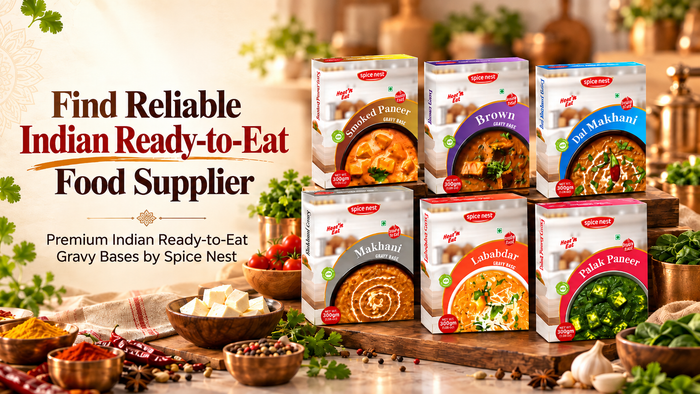
SpiceNest illustrates what this benchmark looks like in practice. As a manufacturer-direct Indian exporter structured for US market compliance, SpiceNest covers a broad portfolio, spice powders, whole spices, cooking pastes, traditional pickles, ready-to-eat meals, sesame seeds, and dry fruits, under FSSAI licensing and international food safety certifications, with COA-per-batch capability and full export documentation support. For US importers managing multiple SKU categories, working with a single vetted manufacturer-exporter simplifies compliance: one quality system, one certification file, one point of accountability, instead of coordinating across four separate Indian suppliers.
How to Calculate Your True Landed Cost and Choose the Right Shipping Method
Most importers price a spice shipment based on the FOB quote and get surprised by the total cost once the container clears US customs. A complete landed cost model covers every dollar between the supplier's factory gate and your US warehouse dock.
FCL vs. LCL: Picking the Right Container Strategy
A 20' Full Container Load (FCL) typically carries 14 to 18 metric tons of bulk spices depending on product density and packing format, and it's the most cost-efficient option for volume buyers. LCL (Less than Container Load) is practical for buyers testing multiple SKUs in the 500 kg to 1,000 kg per SKU range before scaling to full containers, but the per-unit freight cost is meaningfully higher. For initial quality testing before any container commitment, most suppliers ship 100 to 500 gram samples by air freight. Sample first, then commit to volume.
A Realistic Landed Cost Breakdown
Using a 20' FCL from Mundra to New York as a reference point, here's what a realistic 2026 landed cost model looks like:
- Product FOB price:supplier quote per MT or kg
- India-side add-ons(inland transport, port handling, export documentation): approximately USD 1,200
- Ocean freight to New York:approximately USD 3,500 to 4,500 for a 20' FCL
- Marine insurance:approximately USD 200
- US import duty:0% for most spice HTS codes
- US customs broker fees and MPF:variable by shipment value and broker
Calculate landed cost SKU-by-SKU, not as a blanket percentage applied across your order. A high-value spice like cardamom at a small volume will have a very different per-kg landed cost profile than a commodity-grade turmeric powder shipment filling a container.
Lead Times from Indian Ports to US Warehouses
Set your procurement calendar around a realistic 6 to 10 week total window. Production and container loading at Nhava Sheva or Mundra typically takes 14 to 21 days from purchase order for standard stock items, and 21 to 30 days for custom processing or certified organic lots. Ocean transit from western India to major US ports, including Newark, Los Angeles, Savannah, and Houston, adds 2 to 5 weeks depending on routing and port pair. US customs clearance typically adds a few additional business days once the container arrives.
Your Next Steps Before Your First Container Ships
Research is only valuable if it moves you toward execution. The following three actions take you from understanding how to import Indian spices to the USA to running the process with confidence.
Start with Sample Orders Before Committing to FCL
Request 100 to 500 gram samples from your shortlisted suppliers and send them to a US-based accredited lab for testing against your target contaminant panel, Salmonella, pesticide residues, heavy metals, and microbiological load. Evaluate the packaging and labeling against FDA retail requirements at the same time. Only after the lab results come back clean and the documentation checks out should you issue a purchase order for a bulk shipment. This sequence protects you from a costly container detention or product rejection.
Build Your Compliance File Before the Shipment Leaves India
Your FSVP documentation should be complete and in order well before the container loads, waiting until after arrival at port leaves no room to resolve gaps. Before the shipment departs: confirm the supplier's current FDA facility registration, collect FSSAI and international certification copies, obtain the batch COA for your specific production lot, confirm the Prior Notice filing process with your customs broker, and document your FSVP supplier evaluation and hazard analysis review. A customs broker experienced in FDA-regulated food imports is a critical partner here, not an optional one.
Finding US Buyers and Distributors for Your Imported Spices
If you're importing on behalf of a distribution business rather than for your own manufacturing use, identify your US distribution channel before you commit to container volume. Ethnic and specialty food distributors serve Indian and South Asian grocery retailers across major metro markets. Foodservice broadliners supply Indian restaurant groups and catering operations that need consistent bulk cooking pastes, spice blends, and ready-to-eat products. Online specialty retail channels serve the growing segment of American consumers seeking premium, clean-label spices from authentic sources. Understanding where your product fits in the US spice importers landscape before committing to volume is one of the most overlooked steps in a first-time import program.
Importing Indian spices to the USA is a proven, repeatable process. The regulatory layer is manageable when the right supplier and documentation are in place from day one. If you're ready to start sourcing, SpiceNest works directly with US importers to provide certification files, COA documentation, and an export-ready product portfolio, making the process well-documented and accountable from purchase order to port clearance. Reach out to discuss your SKU requirements and request samples before your first bulk commitment.