Spice Nest
Pizza Seasoning
Pizza Seasoning
What Is Pizza Seasoning?
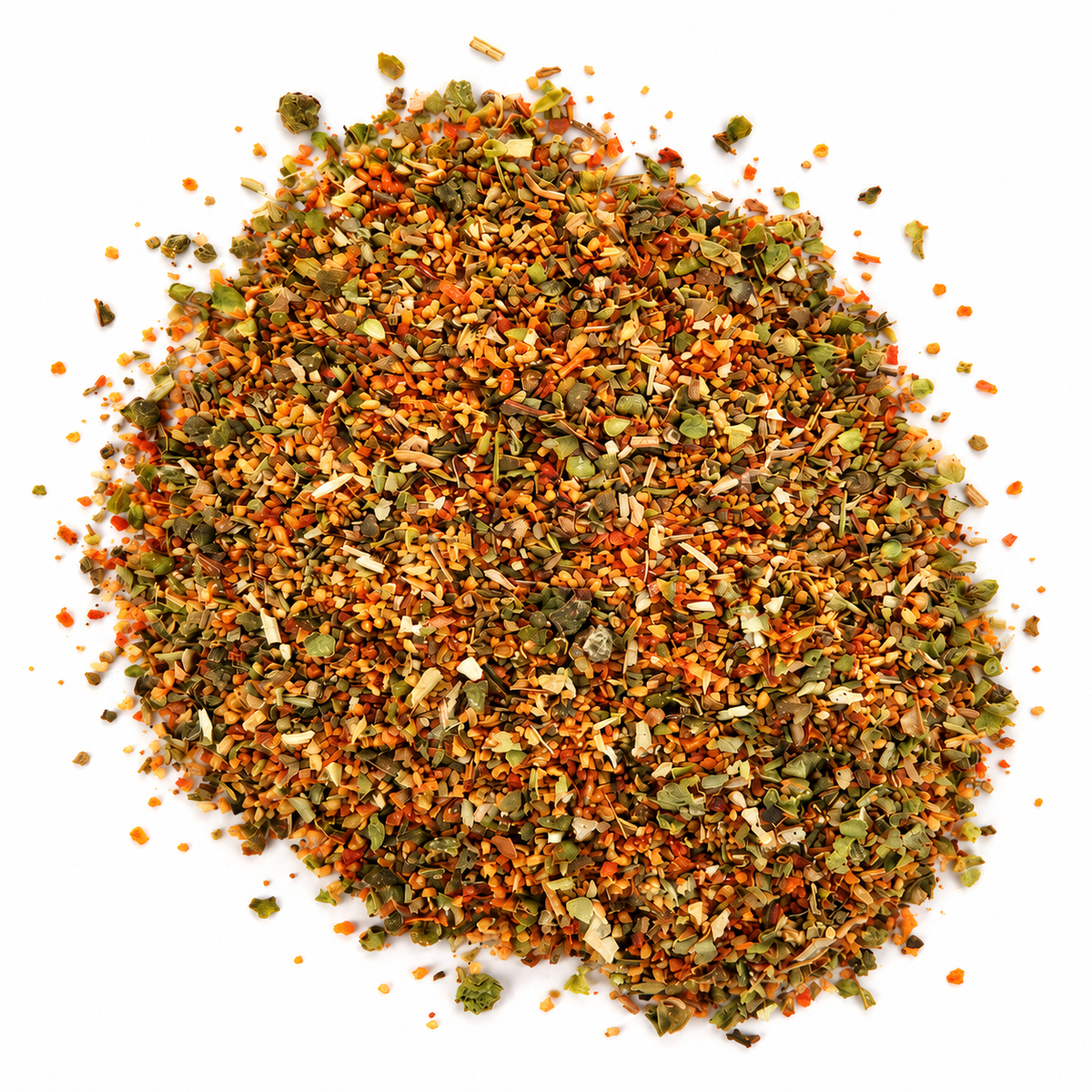
Pizza seasoning is a flavorful dry blend of herbs and spices used to enhance the taste and aroma of pizza, pasta, garlic bread, and other savory dishes. It typically combines aromatic herbs such as oregano and basil with complementary spices to create an Italian-inspired flavor profile.
Spice Nest Pizza Seasoning is intended for restaurants, pizzerias, cloud kitchens, food manufacturers, wholesalers, distributors, and private-label food brands looking for seasoning supply from India.
As an Indian food manufacturer and exporter, Spice Nest offers businesses a way to discuss bulk pizza seasoning requirements, packaging preferences, private labeling, and international supply.
Whether you operate a commercial kitchen, distribute food ingredients, or are developing your own seasoning range, selecting the right pizza seasoning involves understanding its ingredients, flavor profile, intended applications, and commercial specifications.
Spice Nest Pizza Seasoning Specifications
| Specification | Product Information |
|---|---|
| Product Name | Pizza Seasoning |
| Brand Name | Spice Nest |
| Product Type | Dry Herb and Spice Blend |
| Category | Pizza and Italian-Style Seasonings |
| Common Product Variations | Pizza Oregano Seasoning, Pizza Herb Seasoning |
| Country of Origin | India |
| Business Type | Manufacturer and Exporter |
| Supply Type | Bulk Supply Enquiries |
| Private Label | Available for Enquiry |
| Export Supply | Available for Enquiry |
| Target Buyers | Restaurants, Wholesalers, Distributors, Food Manufacturers |
| Packaging | Subject to Product-Specific Confirmation |
| Shelf Life | To Be Confirmed |
| Minimum Order Quantity | Available on Request |
What Ingredients Are Commonly Used in Pizza Seasoning?
Pizza seasoning blends commonly contain aromatic dried herbs and spices that complement tomato-based sauces, cheese, vegetables, and baked food products.
Typical ingredients found in pizza seasoning include:
-
Oregano: Contributes the distinctive herbal aroma associated with pizza.
-
Basil: Adds a sweet, aromatic herbal note.
-
Garlic Powder: Provides savory depth and garlic flavor.
-
Onion Powder: Adds a rounded, mildly sweet, savory taste.
-
Red Chilli Flakes: Introduce heat and spice.
-
Black Pepper: Contributes gentle pungency.
-
Thyme: Adds earthy and herbal notes.
-
Other Herbs and Spices: Depending on the recipe, blends may contain rosemary, parsley, marjoram, or fennel.
These ingredients describe common pizza seasoning formulations. They are not a confirmed ingredient declaration for Spice Nest Pizza Seasoning. Buyers should request the actual product specification, including ingredients, allergens, texture, flavor profile, and relevant nutritional information.
Packaging & Customization
Bulk Packaging
Commercial buyers searching for bulk pizza seasoning often require packaging that supports convenient storage, inventory handling, and regular kitchen or food manufacturing operations.
Spice Nest welcomes bulk supply enquiries from businesses looking for pizza seasoning for recurring commercial use.
When requesting a quotation, buyers can discuss:
-
Required ordering quantity
-
Preferred packaging material
-
Bulk pack weight
-
Storage and handling requirements
-
Labeling and documentation requirements
-
Destination country and delivery preferences
If your business requires a 25 kg PP bag with a liner or another industrial packaging format, confirm its availability specifically for Pizza Seasoning before finalizing the order.
Retail and Private Label Packaging
Private label pizza seasoning is relevant for food brands, retail distributors, supermarket suppliers, and businesses planning to introduce their own seasoning products.
Spice Nest provides private-label services across its food product range and welcomes enquiries about branded pizza seasoning supply.
Potential packaging requirements may include retail jars, shaker bottles, pouches, sachets, and larger foodservice packs.
Buyers should confirm the availability of their preferred pack format, artwork requirements, labeling services, and minimum order quantity.
Custom Requirements
Different foodservice operations and food manufacturers may need different seasoning characteristics.
A pizzeria may prefer an oregano-forward herb blend, while a snack manufacturer may require a finer seasoning with a specific heat level and coating performance.
Buyers can submit requirements relating to:
-
Herb and spice proportions
-
Desired heat level
-
Texture and particle size
-
Salt content
-
Flavor intensity
-
Intended food application
-
Ingredient restrictions
Custom formulation availability must be confirmed with Spice Nest.
Applications of Pizza Seasoning
1. Pizza Restaurants and Pizzerias
Pizza seasoning is commonly used in pizza restaurants as a topping or an ingredient in preparation.
It can be evaluated for traditional cheese pizza, vegetable pizza, paneer pizza, mushroom pizza, and other specialty recipes.
Restaurants can assess the seasoning before or after baking, depending on the blend's formulation and intended flavor outcome.
Commercial kitchens should establish a standard quantity to maintain consistent preparation across servings.
2. Pasta and Italian-Style Dishes
Pizza seasoning can also be useful in pasta recipes, particularly those incorporating tomato sauces, herbs, vegetables, and cheese.
Foodservice operators can evaluate it in red sauce pasta, baked pasta, creamy pasta preparations, and other Italian-inspired dishes.
The final result depends on the seasoning's herb composition and its compatibility with the existing sauce ingredients.
3. Garlic Bread and Bakery Products
Garlic bread, breadsticks, cheese toast, and savory baked products are common applications for oregano-based seasoning blends.
Pizza seasoning can be incorporated into flavored butter, oil mixtures, toppings, or appropriate dough formulations.
Bakeries and commercial kitchens should evaluate aroma, distribution, and flavor after baking before approving a specific recipe.
4. Cloud Kitchens and Quick-Service Restaurants
Cloud kitchens and quick-service restaurant operators often prepare multiple products using related savory flavor profiles.
Pizza seasoning may be evaluated for:
-
Pizza and pizza-inspired snacks
-
Garlic bread
-
Sandwiches
-
Burgers and wraps
-
Baked potato wedges
-
Cheese-based snacks
-
Seasoned bread products
A measured seasoning process can help kitchen teams deliver a more consistent flavor experience.
5. Food Manufacturing and Snack Production
Food manufacturers may evaluate pizza seasoning for seasoning blends, snack coatings, and prepared food products.
Potential applications include flavored chips, extruded snacks, popcorn, crackers, savory bakery products, and ready-to-prepare meal components.
Industrial use requires more than selecting a familiar flavor. Manufacturers should assess particle size, ingredient distribution, salt level, processing performance, and the final product's sensory characteristics.
6. Hotels, Cafes, and Catering Services
Hotels, cafes, and catering kitchens can use pizza seasoning as part of recipe development for Italian-inspired menus and savory preparations.
Applications may include roasted vegetables, baked dishes, pizza, pasta, and bread-based appetizers.
Large kitchens should conduct recipe trials at the intended batch size and document an approved seasoning quantity for repeatable results.
7. Sauces, Dips, and Marinades
Pizza seasoning can contribute herbal and savory flavor to suitable tomato sauces, dips, dressings, and marinades.
Its suitability depends on the finished formulation, including the sauce's acidity, salt, oil content, and other seasonings.
Food businesses should conduct application testing before incorporating a particular seasoning blend into commercial sauce manufacturing.
Why Choose Spice Nest Pizza Seasoning?
1. Indian Manufacturing and Export Experience
Spice Nest is a food manufacturer and exporter based in Gujarat, India, supplying a diverse range of spices, seasonings, sauces, cooking pastes, and related food products.
Businesses exploring pizza seasoning supply can contact Spice Nest to discuss their intended applications, sourcing requirements, and commercial needs.
2. Bulk Supply Opportunities
Restaurants, food manufacturers, wholesalers, and distributors frequently need repeatable purchasing arrangements.
Spice Nest welcomes bulk enquiries, allowing buyers to discuss required quantities, packaging preferences, and expected ordering frequency.
Commercial terms, minimum order quantities, and fulfillment arrangements should be confirmed in the quotation.
3. Private Label Supply for Food Brands
Food businesses planning to launch their own pizza seasoning can explore private-label options with Spice Nest.
Private-label discussions may cover branding, packaging formats, labeling, target markets, and product specifications.
The final service scope should be agreed upon before commercial production.
4. Application-Based Product Selection
Selecting a seasoning blend based on its final application is important for foodservice and manufacturing buyers.
For example, a seasoning intended for sprinkling over finished pizza may require different characteristics from one designed for a snack coating or sauce formulation.
Spice Nest buyers can communicate their intended applications when requesting product information or quotations.
5. International Export Enquiries
Spice Nest supports international food product sourcing enquiries.
Overseas importers, food distributors, and private-label brands can discuss pizza seasoning requirements with the export team.
Importers, including buyers sourcing for the USA market, should confirm destination requirements, labeling, documentation, commercial shipping terms, and product availability before ordering.
Quality, Safety & Product Information
Product Specifications and Quality Evaluation
Commercial pizza seasoning buyers should obtain a current product specification before approving a supplier.
Important evaluation points include:
-
Complete ingredient declaration
-
Appearance and particle size
-
Flavor and aroma profile
-
Allergen information
-
Relevant product testing documentation
-
Storage and handling conditions
-
Shelf life
-
Packaging specifications
The approved specification should correspond to the exact product being supplied.
Ingredient and Allergen Information
Pizza seasoning recipes vary between manufacturers and product varieties.
Buyers should obtain the current ingredient declaration and relevant allergen information before using the seasoning in food products or preparing consumer-facing labels.
Do not assume that a pizza seasoning is automatically gluten-free, vegan, preservative-free, organic, or free from specific allergens.
Any such claims should be supported by documentation for the actual formulation.
Manufacturing Quality and Documentation
Food manufacturers and international importers may require supplier documentation as part of their purchasing and product approval process.
Depending on the buyer and destination market, relevant requirements may include ingredient specifications, batch information, test results, traceability information, and applicable manufacturing certifications.
The documents available for Spice Nest Pizza Seasoning should be confirmed directly with the company.
Usage and Storage
Pizza seasoning should be used according to the instructions supplied with the specific formulation.
The amount required depends on the seasoning's concentration, salt content, intended recipe, and preparation method.
Buyers should also follow the product's stated storage and handling instructions.
Confirm product-specific shelf life, packaging integrity, and remaining shelf life at dispatch before placing commercial orders.
Pizza Seasoning for Businesses and Export Supply
Pizza Seasoning Manufacturer in India
Businesses looking for a pizza seasoning manufacturer in India can contact Spice Nest with their product and commercial requirements.
Share the intended application, expected quantity, preferred packaging, and any specific flavor characteristics required for your operation.
A clear product brief helps establish whether the available seasoning specification is appropriate.
Bulk Pizza Seasoning Supplier for Restaurants
Pizzerias, restaurant chains, foodservice distributors, and cloud kitchens may require pizza seasoning for regular commercial operations.
Buyers should evaluate both product performance and supply suitability.
Key purchasing factors include flavor consistency, pack size, order quantity, product documentation, and delivery arrangements.
Pizza Seasoning Exporter for International Buyers
International buyers sourcing pizza seasoning from India should confirm the destination market's applicable requirements before completing a purchase.
Provide the destination country, product specifications, required quantity, proposed packaging, and commercial delivery preferences when requesting an export quotation.
International shipment availability should not be interpreted as confirmation of local overseas inventory or guaranteed delivery times.
Private Label Pizza Seasoning for Food Brands
Private label pizza seasoning can help food businesses develop a branded range of Italian-inspired herb and spice blends.
Brand owners should discuss the proposed product specification, packaging, labeling responsibilities, artwork, and expected order volume.
Private-label manufacturing arrangements should be documented before product launch.
Frequently Asked Questions About Pizza Seasoning
1. What is pizza seasoning?
Pizza seasoning is a dry blend of herbs and spices used to enhance pizza and other savory foods. It commonly contains ingredients such as oregano, basil, garlic, onion, and chilli, although the actual recipe varies. Pizza seasoning can be used in pizza toppings, sauces, pasta, garlic bread, and suitable snack preparations.
2. What ingredients are used in pizza seasoning?
Common pizza seasoning ingredients include oregano, basil, garlic powder, onion powder, chilli flakes, black pepper, and other herbs. Some blends include thyme, parsley, rosemary, or fennel. Spice Nest's exact ingredient composition should be confirmed through its current product specification.
3. Is pizza seasoning the same as oregano?
No. Oregano is an individual herb, while pizza seasoning generally contains a combination of herbs and spices. Although oregano is often an important ingredient, pizza seasoning may also contain garlic, basil, chilli, onion, and other flavoring ingredients.
4. What is the difference between pizza seasoning and Italian seasoning?
Italian seasoning generally refers to a blend of dried herbs such as oregano, basil, thyme, and rosemary. Pizza seasoning may contain similar herbs with additional ingredients such as garlic, onion, or chilli. The exact difference depends on the manufacturer's formulation.
5. How do you use pizza seasoning?
Pizza seasoning can be sprinkled onto suitable foods or incorporated into sauces and other recipes. Its application depends on the ingredients and intended preparation method. Follow the supplier's directions and test a measured quantity before establishing a standard commercial recipe.
6. Can pizza seasoning be added before baking?
Some pizza seasoning blends can be added before baking, while others may be more suitable as finishing seasonings. The preferred method depends on the formulation, baking temperature, and flavor required. Commercial kitchens should test both methods when appropriate.
7. Can pizza seasoning be used for pasta?
Yes. Many pizza seasoning blends can complement pasta dishes, particularly recipes with tomato sauce, vegetables, garlic, and cheese. The seasoning should be evaluated alongside the other ingredients to achieve the desired balance of flavor.
8. Can pizza seasoning be used for garlic bread?
Pizza seasoning is commonly used in garlic bread and savory bread preparations. Depending on the formulation, it may be blended into flavored butter or applied as a topping. The appropriate amount should be established through recipe testing.
9. Is pizza seasoning spicy?
Not necessarily. Pizza seasoning can be mild, herbal, or spicy depending on the ingredients and the amount of chilli or pepper included. Buyers should request the actual flavor profile or evaluate a sample rather than assume that every pizza seasoning has the same heat level.
10. What does oregano pizza seasoning taste like?
Oregano-based pizza seasoning generally has an aromatic, herbal, savory flavor. Other ingredients may introduce garlic notes, mild sweetness, or chilli heat. The final flavor depends on the formulation and ingredient proportions.
11. Can pizza seasoning be used on fries and snacks?
Pizza seasoning may be evaluated for fries, popcorn, chips, and other savory snack applications. Food manufacturers should confirm suitability for direct application and assess particle size, adhesion, flavor distribution, and the finished product's sensory performance.
12. How much pizza seasoning should be used?
The ideal quantity depends on the seasoning formulation, food quantity, recipe, and preferred taste. A universal dosage should not be assumed. Request product-specific usage guidance and establish a standard quantity through recipe trials.
13. Is Spice Nest Pizza Seasoning suitable for restaurants?
Spice Nest welcomes foodservice and commercial seasoning enquiries. Restaurant operators should assess the available product specification, intended applications, packaging, ordering requirements, and preparation performance before adopting the seasoning in their kitchens.
14. Can I buy pizza seasoning in bulk from Spice Nest?
Businesses can contact Spice Nest for bulk pizza seasoning enquiries. Provide the required quantity, preferred packaging, business application, and delivery destination. Product availability, order quantities, prices, and commercial terms should be confirmed in the quotation.
15. Is private label pizza seasoning available?
Spice Nest offers private-label services across its food product range. Businesses developing a branded pizza seasoning can submit their packaging, labeling, product, and quantity requirements for review. Confirm the services available for the specific seasoning before placing an order.
16. What packaging options are available for bulk pizza seasoning?
Bulk seasoning packaging may include larger bags or other suitable commercial formats, depending on the supplier and product specification. Contact Spice Nest to confirm available pack sizes and whether a 25 kg PP bag with liner or another preferred format can be supplied.
17. Does Spice Nest export pizza seasoning from India?
Spice Nest operates as an Indian food manufacturer and exporter and accepts international product enquiries. Overseas buyers can contact the company regarding pizza seasoning, destination requirements, available documentation, quantity, and shipping arrangements.
18. What is the shelf life of pizza seasoning?
Shelf life varies according to ingredients, processing, packaging, and storage conditions. The shelf life of Spice Nest Pizza Seasoning should be confirmed from the current product specification and supplied packaging information.
19. How should pizza seasoning be stored?
Follow the storage instructions provided for the purchased formulation. Many dry herb and seasoning products require protection from excess moisture, heat, and prolonged exposure to air. Commercial buyers should also confirm handling instructions after opening the package.
20. Why choose Spice Nest for pizza seasoning bulk supply?
Spice Nest is an Indian food manufacturer and exporter serving businesses across food product categories. Buyers can enquire about bulk supply, private labeling, and export requirements. Before purchasing, assess the product specification, application suitability, packaging, available quality documentation, and commercial quotation.
Enquire About Spice Nest Pizza Seasoning
Looking for a Pizza Seasoning Manufacturer and Exporter in India?
Connect with Spice Nest for pizza seasoning product enquiries, bulk purchasing, private label requirements, and international export discussions.
Whether you operate a pizzeria, restaurant chain, food manufacturing facility, wholesale distribution business, or private-label food brand, share your sourcing requirements with the Spice Nest team.
Include your required quantity, intended application, packaging preferences, and delivery destination to receive relevant product information and discuss commercial terms.
Contact Spice Nest to Request Product Details and a Bulk Quotation.